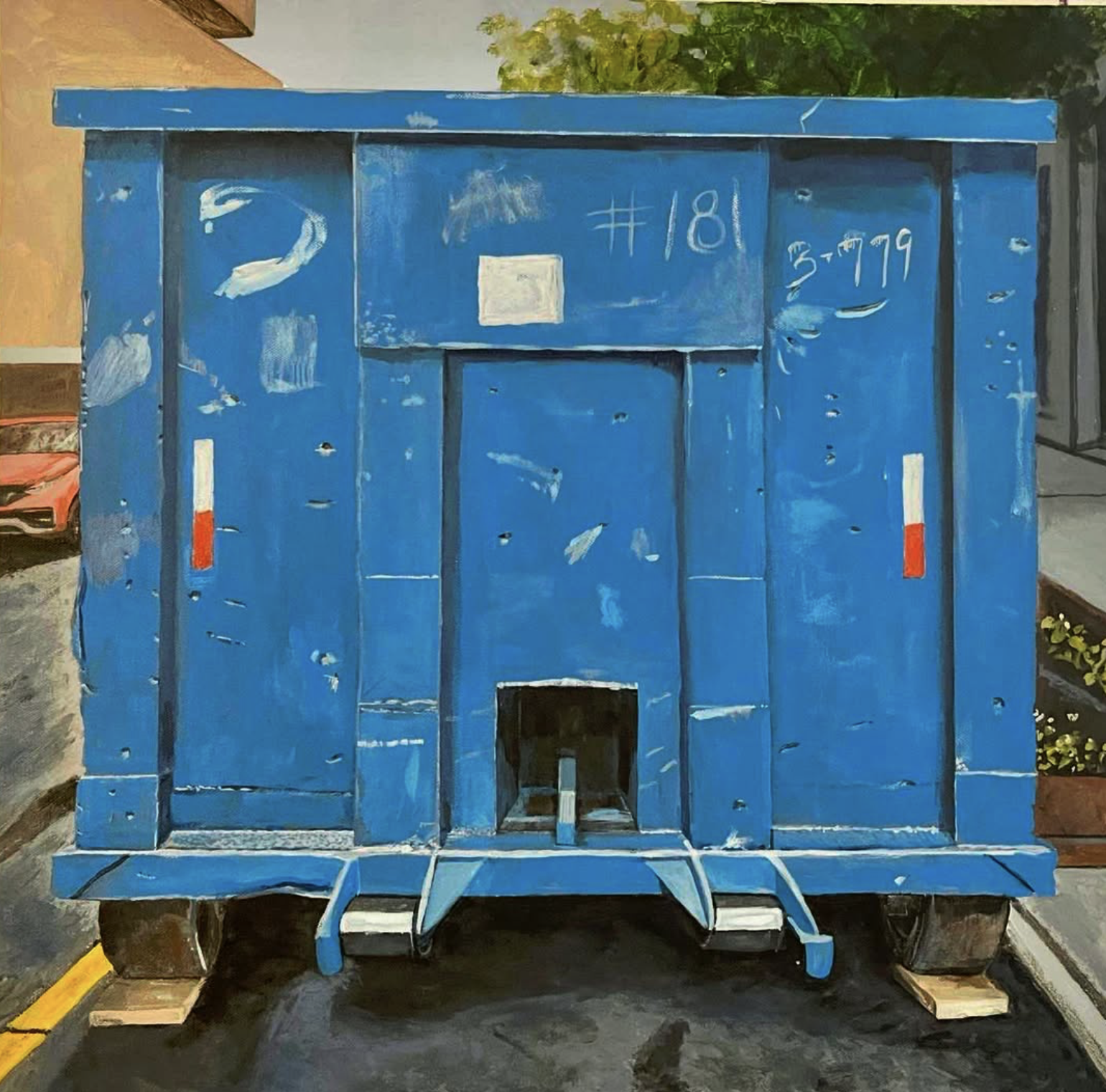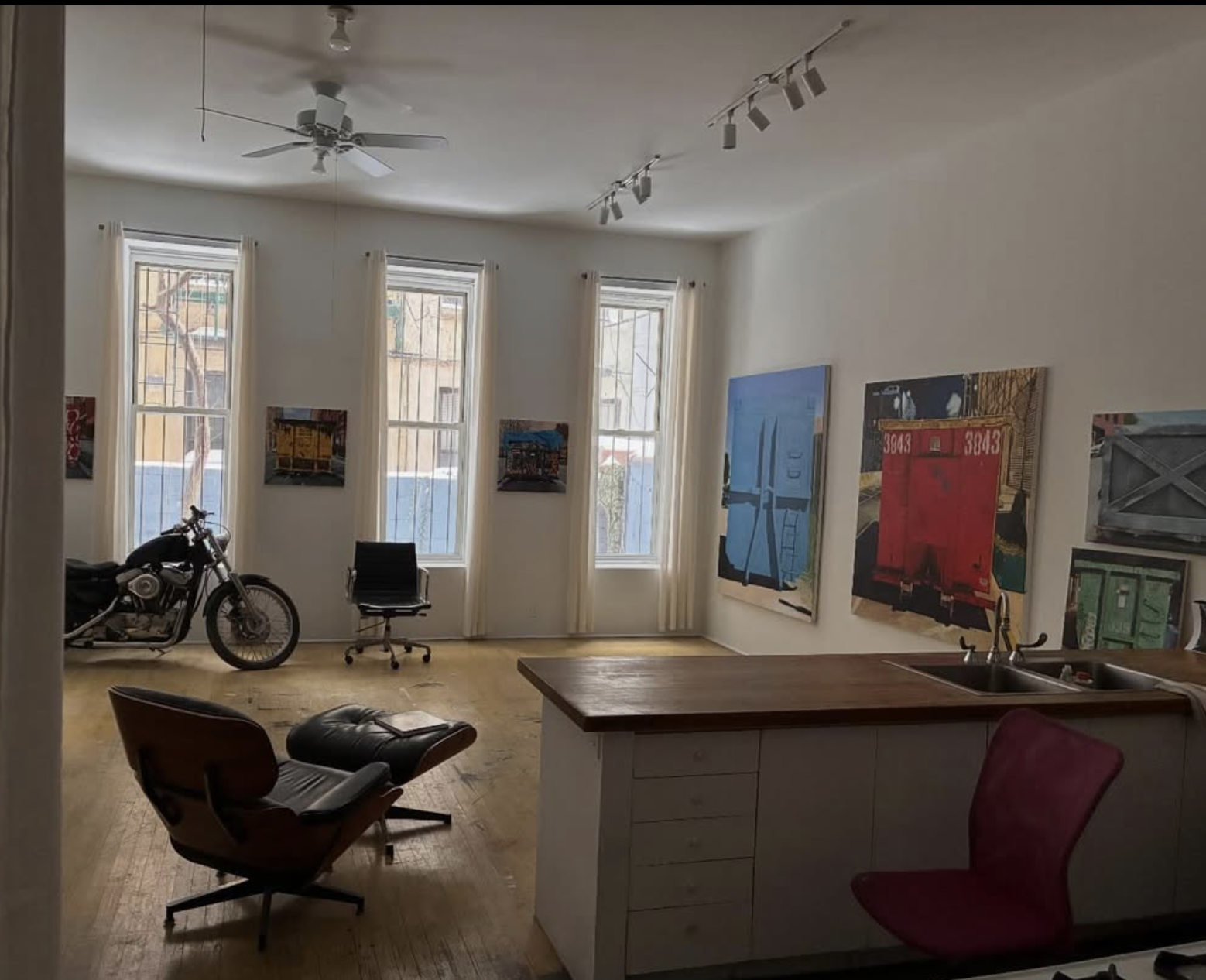
The Dumpster Series
“In 1984, I regularly walked my dog through the alleys behind the buildings in my neighborhood. The alley behind my studio became part of my daily route—morning, afternoon, and evening. What began as a routine walk past trash and refuse gradually led me to notice something unexpectedly compelling: dumpsters.
Dumpsters are ubiquitous. They exist everywhere, yet they are largely ignored. Their ordinariness attracted me.
I have always been interested in the idea of working in series. A series allows for a sustained exploration of a subject, revealing variation, nuance, and unexpected possibilities over time. Many artists have returned repeatedly to a single motif: Ed Ruscha's Parking Lots, Claude Monet's Grainstacks, and Hiroshi Sugimoto's Theaters. Their work demonstrates how repeated attention can transform a familiar subject into something profound.
I was also inspired by a remark attributed to Paul Cézanne: "With an apple, I shall astonish Paris." Through his treatment of a simple, everyday object, Cézanne altered the way people saw painting itself. His apples became a vehicle for exploring color, form, structure, and perception.
As a springboard for my own work, I replaced the apple with the dumpster.
At the same time, I became interested in how this unlikely subject could engage the traditional genres of painting. Historically, painting has been organized around portraiture, still life, and landscape. The dumpster offered a way to bring all three together. It could be approached as a portrait, with its own distinct character and presence. It could function as a still life, an arrangement of objects, surfaces, colors, and forms. Situated in alleys, streets, and industrial spaces, it also became a landscape element, inseparable from its surrounding environment.
The challenge was to take an object associated with utility, waste, and neglect and use it to investigate the same formal and aesthetic concerns that painters have traditionally explored through faces, fruit, and scenery. By returning to dumpsters again and again, I sought to discover whether an overlooked object could sustain the depth, variety, and visual richness of the most enduring subjects in the history of painting.”
-Mark Pasek, 2026